
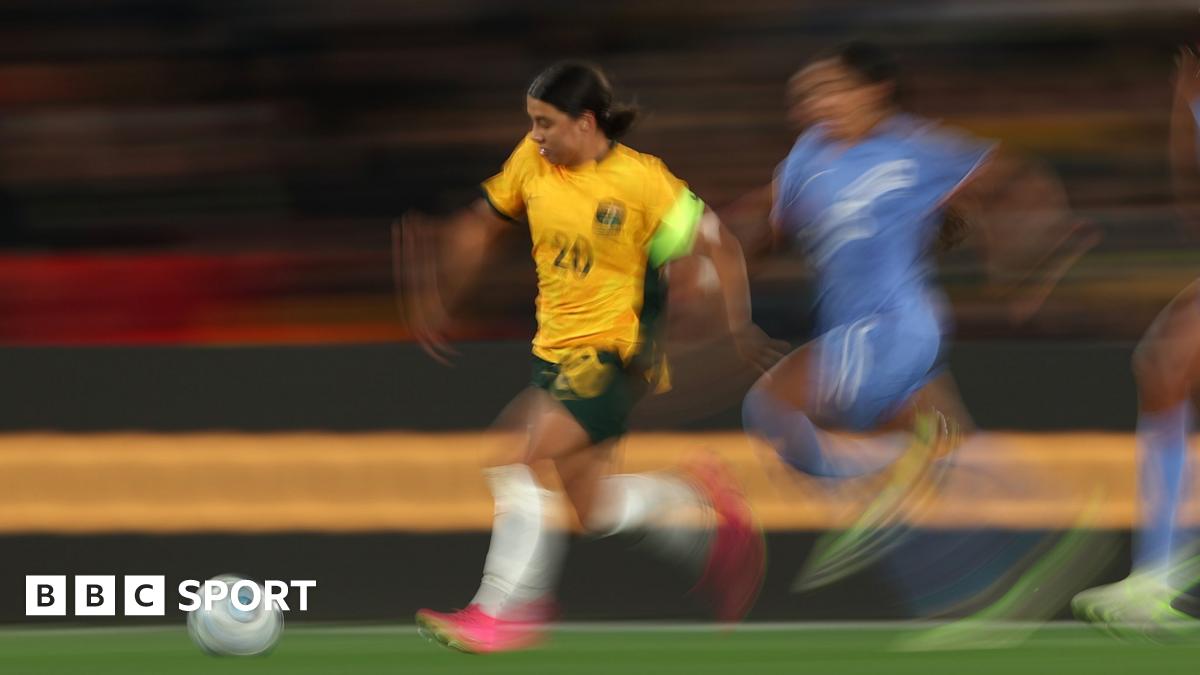
Women’s World Cup: Australia seek a Cathy Freeman moment at ‘football’s Sydney Olympics’
[ad_1]
Walsh knows first hand the long journey taken by the Matildas to earn a place at football’s top table.
Now ranked 10th in the world by Fifa, she was part of the 2007 squad that went to China not knowing how things would turn out on the field. Australia had qualified for the three previous tournaments but not won a match.
“We didn’t know if we were good enough”, she recalled. “It was the first time we had qualified through the Asian Confederation, and we were untested at this level.
“I scored the first goal against Ghana in a 4-1 win in the group, and we knew then we were pretty good!
“We then drew with Canada and Norway and reached the quarter-finals.”
They were eventually knocked out by Brazil, but the standard was set, and the Australian public responded.
“We had a TV documentary crew with us at the tournament”, Walsh added. “We were part of history. One specific was I came back to Australia and I didn’t have to explain what a ‘Matilda’ was any more.
“That was the incremental change I was part of. Now this current crop of players are leading another step change. We see now that the Matildas are ahead of the Wallabies in brand awareness.”
Legacy is at the heart of what Walsh and her team at Football Australia are building. It’s a word often used after each major sporting event, so what are the specifics that are in place to ensure future Matildas come through the ranks?
Walsh said: “We’ve received over 300 million Australian dollars [£157m, $206m] through federal or state government as a result of hosting. Adelaide’s Hindmarsh Stadium complex has had 53 million dollars of investment – that will benefit Adelaide United in the Women’s A-League.
“We have an ambitious goal to reach 50:50 female and male membership in grassroots football. We have a framework at national level for pay parity between the Matildas and Socceroos, so why can’t we take that to all levels of the game?
“There will be better decision-making for women and girls, like having better irrigation on pitches, and more lighting. We’re more sophisticated in working on what the barriers are.”
[ad_2]
Source link


